Graphic Tablet vs. Traditional Paper and Pen: Which Is Better for Artists?
Whether you’re creating original characters, refining them, or drawing dynamic manga panels, every artist asks the same question: Should I use a graphic tablet or stick with traditional paper and pen?
The truth is, there isn’t a universal winner.
Both methods have unique strengths, and many professional artists use a combination of both. However, if speed, efficiency, and long-term costs are your priorities, a graphic tablet offers significant advantages. On the other hand, when it comes to quickly creating loose sketches, traditional paper and pen still hold a special place.
In this guide, we’ll compare the two methods to help you decide which one best fits your workflow.
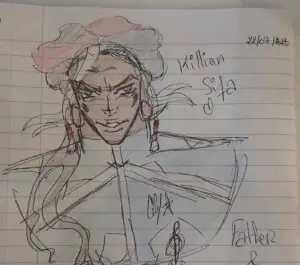
CindyMBK’s illustration of an OC (Killian Sifa) using a sketchbook and a pen
Why a Graphic Tablet Is the Best Choice for Digital Artists
A graphic tablet has become an essential tool for illustrators as digital art software continues to evolve. Tablets provide features that aren’t possible with traditional media. One of the biggest advantages of using a graphic tablet is the speed it provides during the production process.
Digital tools let you:
- Undo mistakes instantly.
- Resize or transform drawings without starting over.
- Move individual layers independently.
- Reuse assets and backgrounds.
- Copy poses or reference elements.
- Edit colours with a few clicks.
When working on illustrations or multiple manga panels, these features dramatically reduce production time. Instead of redrawing entire sections because of a mistake, you can make corrections within seconds.
This makes a graphic tablet especially valuable for artists creating webcomics, manga chapters, or professional illustration projects.
Graphic Tablets Are More Cost-Effective Over Time
Although purchasing a graphic tablet requires an upfront investment, it often saves money in the long run.
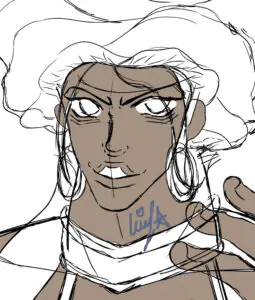
CindyMBK’s illustration on a graphic tablet (Clip Studio Paint)
Traditional art regularly requires purchasing:
- Sketchbooks
- Printer paper
- Pens
- Ink
- Erasers
- Replacement nibs
Digital artists, meanwhile, can use virtually unlimited digital canvases without buying new paper every week.
A graphic tablet also allows you to:
- Store thousands of artworks digitally.
- Create multiple versions without wasting materials.
- Export artwork instantly.
- Share files with clients online.
- Back up your entire portfolio.
For artists producing many original characters or commercial illustrations, these savings accumulate quickly.
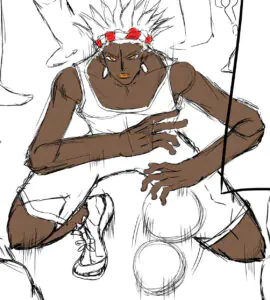
Anime OC Ideas: A Complete Guide With Killian Sifa
Digital Drawing Makes Editing Easier
Professional artwork rarely looks perfect on the first attempt.
A graphic tablet simplifies revisions by allowing artists to:
- Change line weight.
- Adjust perspective.
- Correct anatomy.
- Reposition characters.
- Experiment with different colour palettes.
For creators working on OC sketches, this flexibility is especially useful when refining hairstyles, clothing designs, expressions, and poses before finalising a character.
Instead of restarting from scratch, every version can be saved separately for future reference.
Why Traditional Paper and Pen Are Still Great
Despite all the benefits of digital art, traditional drawing remains one of the fastest ways to explore ideas. Sometimes inspiration arrives unexpectedly. Picking up a pencil and sketching on paper often feels more immediate than opening software, selecting brushes, and preparing a digital workspace.
Many artists find that traditional drawing encourages freedom because there are fewer tools and distractions.
Paper Is Faster for Rough Sketches
When creating quick concepts, traditional paper often wins.
Loose sketches can be produced almost instantly, making it ideal for:
- Character brainstorming
- Thumbnail compositions
- Quick facial expressions
- Pose exploration
Many artists still begin their original character sketches with pencil before moving to a graphic tablet for clean line art and colouring (which was my case).
The tactile feeling of graphite on paper also helps many artists draw more naturally.
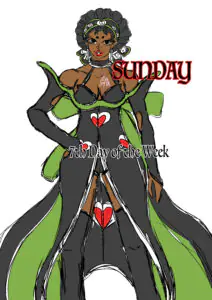
Traditional Sketching Helps Creativity Flow
Working traditionally removes the temptation to zoom, erase, or endlessly perfect every line. Instead, artists focus on capturing movement and energy. This is particularly valuable during the early planning stages of:
- Character design
- Environment concepts
- Manga panels
- Storyboarding
- Composition thumbnails
A simple notebook and pen can be carried anywhere, making it easy to sketch ideas whenever inspiration strikes.
Which Should You Choose?
If your primary goal is producing polished artwork, illustrations, comics, or manga, investing in a graphic tablet is the smarter long-term choice. It offers faster editing, greater flexibility, lower ongoing costs, and a streamlined workflow that can save countless hours throughout your artistic career.
However, if you enjoy rapidly exploring ideas, experimenting with poses, or creating expressive OC black character sketches, traditional paper and pen remain difficult to beat. Nothing matches the simplicity of opening a sketchbook and letting ideas flow naturally.
Ultimately, the strongest artists don’t see these tools as competitors. They use paper for creativity and spontaneity, then rely on a graphic tablet to refine, polish, and publish professional-quality artwork.
